
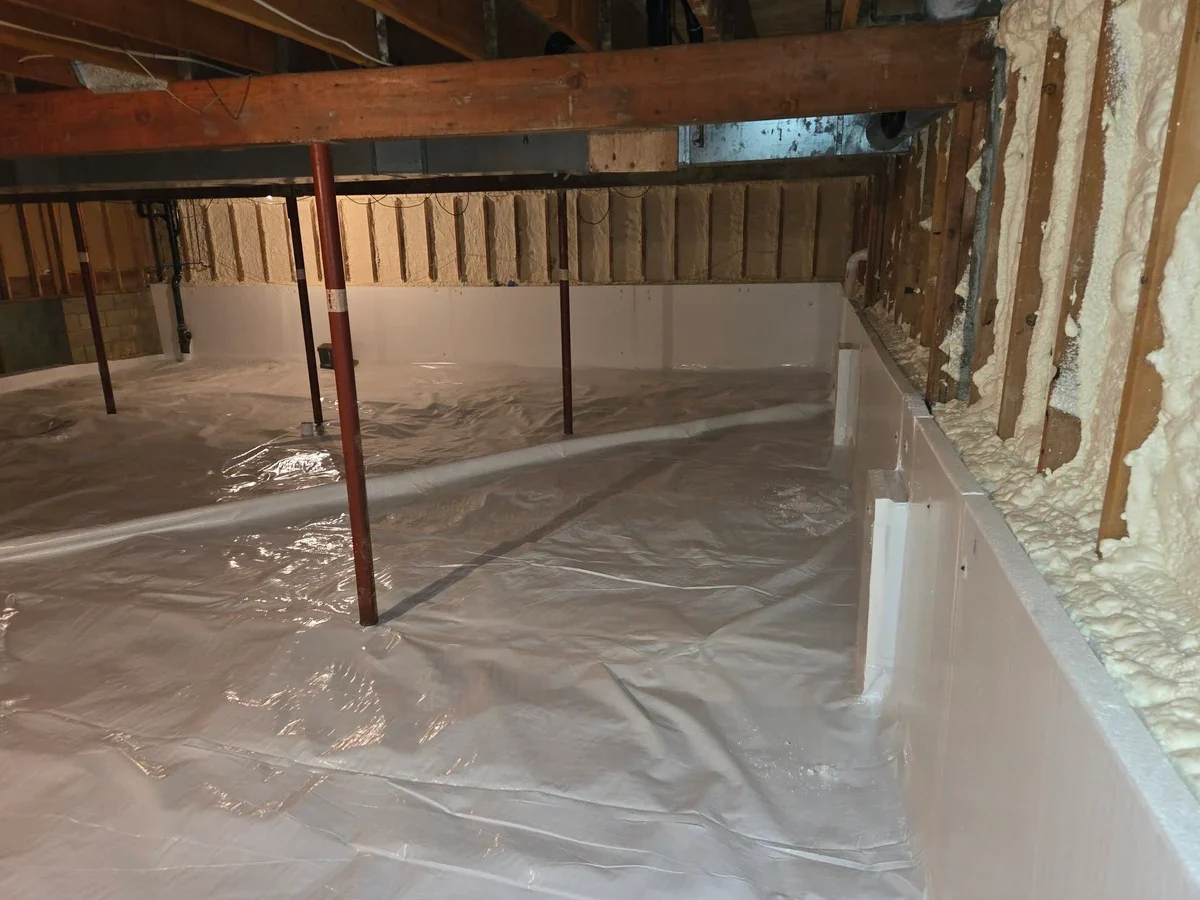
What encapsulation changes
Crawlspace encapsulation uses a continuous moisture barrier and related sealing details to limit moisture entering the enclosed space. The Building America Solution Center, managed by Pacific Northwest National Laboratory, describes ground coverage, joined seams, and connections at walls and piers as parts of crawlspace water management. A sheet loosely covering the center of the soil is not the whole system.
That guidance says bulk-water and drainage problems should be addressed before a vented crawlspace is sealed and insulated. If water pools after rain, identify its route and collection needs first. Ask how the barrier will fit around existing supports, access openings, and equipment, and how the space will remain accessible for inspection.
What a dehumidifier changes
A crawlspace dehumidifier removes moisture from the air. EPA recommends keeping indoor relative humidity below 60 percent, ideally between 30 and 50 percent if possible. This is general moisture-control guidance, not a guaranteed setting for every crawlspace. Record humidity readings and discuss suitable equipment, operating conditions, and the drainage arrangement for your space.
The two measures can complement each other: a barrier limits one moisture source while dehumidification manages humidity that remains. Neither description means a dehumidifier can remove a puddle from the ground. Tell the assessor about materials that stay damp as well as the number on a humidity meter.
Choose the next step from the symptoms
If there is standing water, start the conversation with drainage installation or repair. If the ground is exposed, show the coverage and condition of any existing barrier. If the floor appears dry but the air remains humid, share readings taken over several days. These observations help explain why one control, or a combination, is being recommended.
Before calling Christy’s Waterproofing at (330) 352-8611, gather photos from the access opening, the location of any water, and details of existing equipment. Ask which moisture source each proposed part of the work addresses and how the system will be maintained. You should understand why the recommended combination fits your crawlspace.