
Start with the route rainwater takes
University of Minnesota Extension recommends reviewing gutters, downspouts, and ground slope when investigating basement moisture. A downspout can concentrate roof runoff beside a foundation, while ground sloping toward the house can direct surface water back to the wall. A drainage-system assessment should follow that outdoor route before assuming the basement needs one particular product.
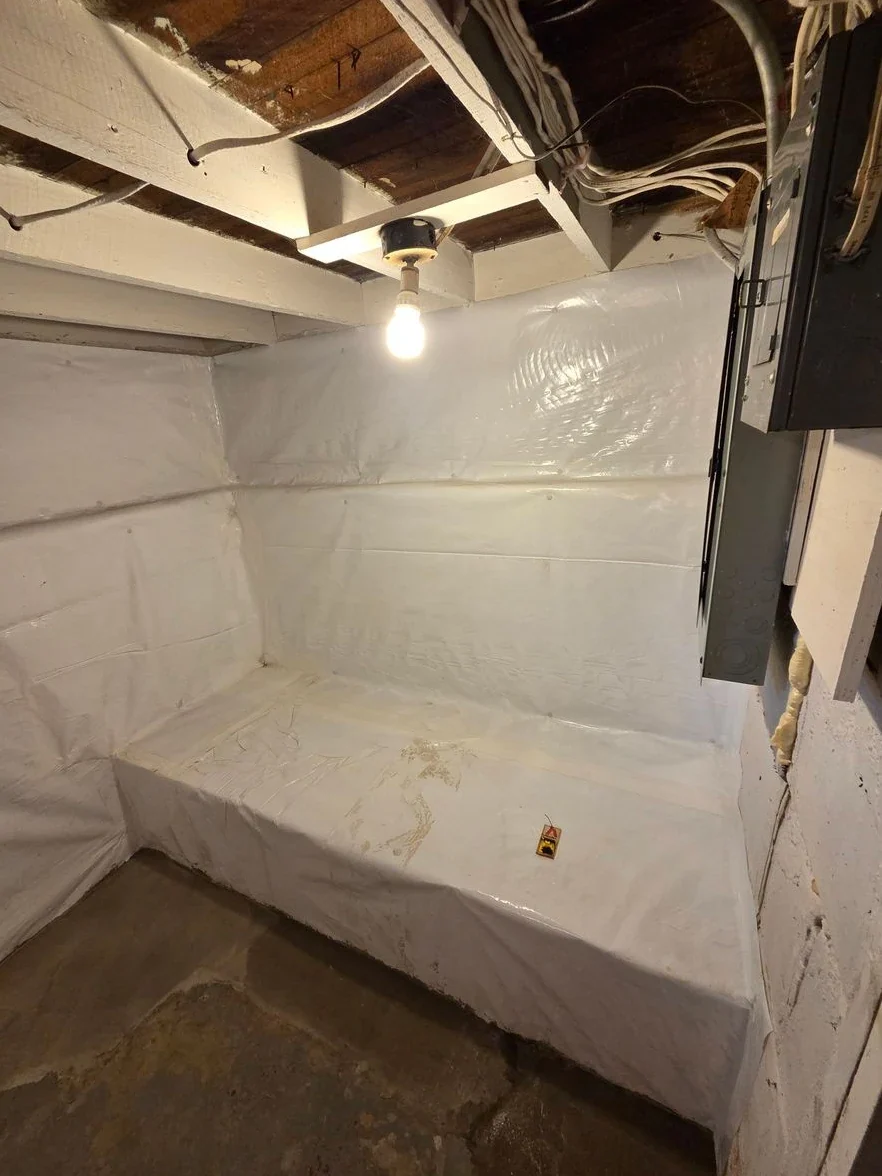
From a dry, accessible position, note whether water first appears below a window, through a wall crack, or at the wall-floor joint. Missouri’s Department of Natural Resources describes how drainage beneath and around a basement helps keep water from accumulating there. Compare the wet location with the ground outside; these are pathways to investigate, not a diagnosis from one photograph.
Separate water entry from wall damage
A leaking crack and a wall that is bowing or changing shape need separate consideration. Basement and foundation repair looks at the affected wall as well as water entry. Tell the assessor about earlier patches and any change you have noticed. Ask which part of the proposed work addresses the wall and which part manages the water.
A dehumidifier reduces airborne moisture; it does not collect rainwater running onto the floor. A sump pump installation may be appropriate when a collection system brings water to a pit that needs pumping. The useful questions are how water will reach that pit and where it will leave the property.
What to record before calling
Make a short leak record: the date of rainfall, the first wet location, how long afterward it appeared, and whether the sump was running. Add photos of the affected surface and nearby downspout outlet when conditions are safe. Keep descriptions specific: water below a window is more useful than saying the whole basement is bad.
Your next step is to call Christy’s Waterproofing at (330) 352-8611 with that record and your property location. Ask for an assessment that explains the suspected water path, the proposed repair, and the intended drainage destination. This gives you a concrete basis for discussing the work before covering the area with new finishes.